Breastfeeding

Feeding your baby only breastmilk in her first six months (exclusive breastfeeding) is particularly good for her. Exclusive breastfeeding gives your baby:
- Every nutrient she needs to thrive and grow well.
- Hormones to help her body function well.
- Disease-fighting compounds that protect her against illness. Breastfed babies are much less likely than formula-fed babies to suffer from diarrhoea and vomiting, colds, chest infections such as bronchiolitis and pneumonia, and ear infections.
- Microbes that help her organs, gut, immune system and brain to develop.
Newborn babies are very alert and awake for the first few hours after birth. They are ready to practise drinking from the breast. Every newborn, when placed on her mother's abdomen soon after birth, has the ability to find her mother's breast all on her own and to decide when to take the first feed. This is called the 'Breast Crawl.’ Some babies only smell or lick the breast, other newborns start sucking immediately. This quick latch on after birth has an "imprinting" effect and is a good start. We recommend feeding your baby while lying down, especially during the first days after birth. The baby is on its side, her tummy against your stomach. The nipple close to the baby's nose so the baby does not have to turn its head to grab the breast.
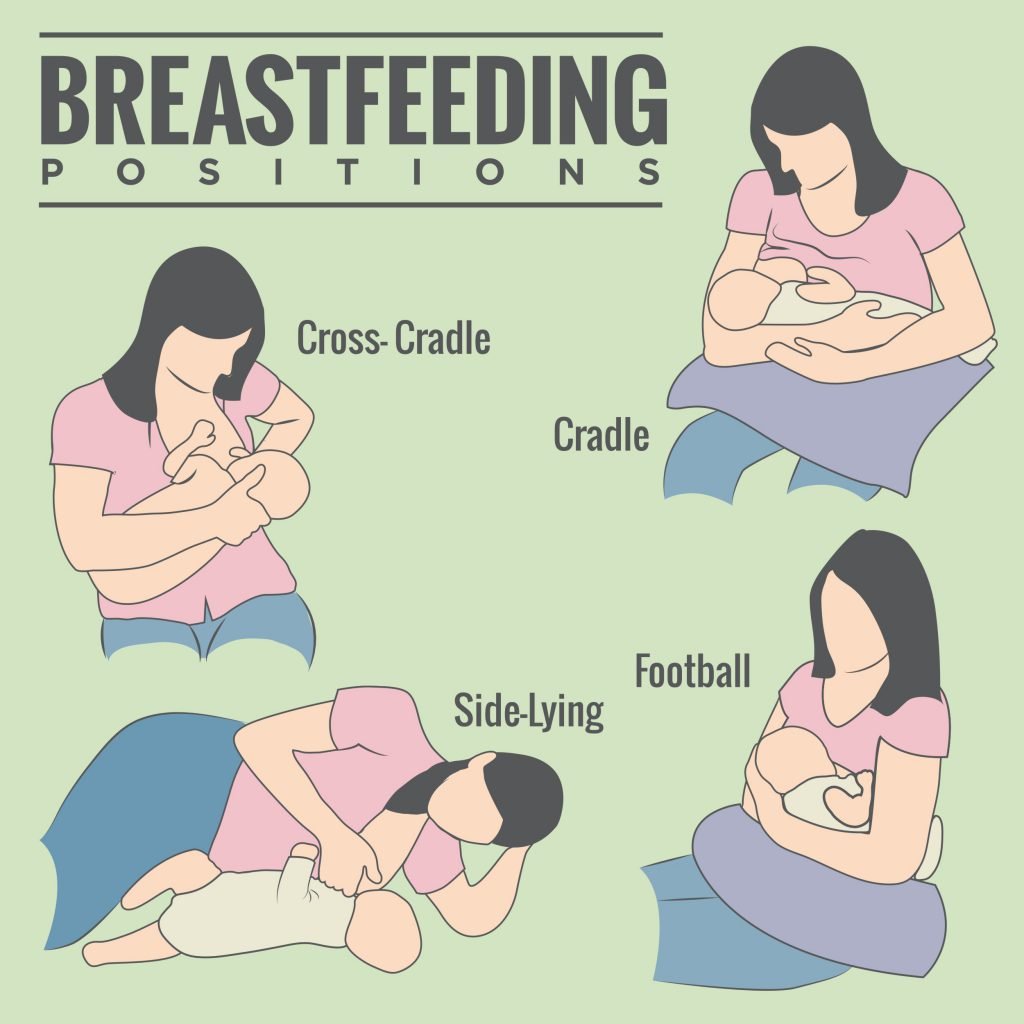
Breastfeeding positions
Signals
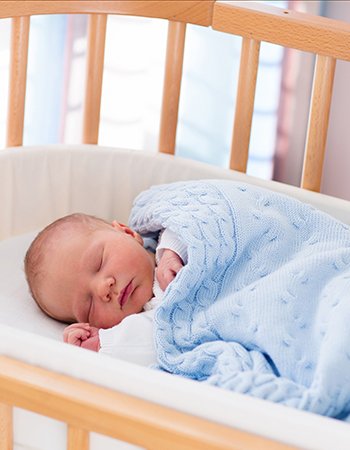
The baby gives small signals that she is ready for a feed long before she starts to cry. These ‘signals’ can be: a change in breathing, the movement of the mouth or an arm. There is movement in the baby while she still seems to be sleeping. These signals are best seen and heard when the baby is close to you, for example in a crib next to your bed (so called rooming-in). If you latch on your baby at this quiet moment before she starts to cry, the feeding can start peacefully. If you wait for the baby to cry, it will be more difficult for the baby to latch on.